
Organizational Structure
From Defining Responsibilities to Building an Integrated and Effective Organization
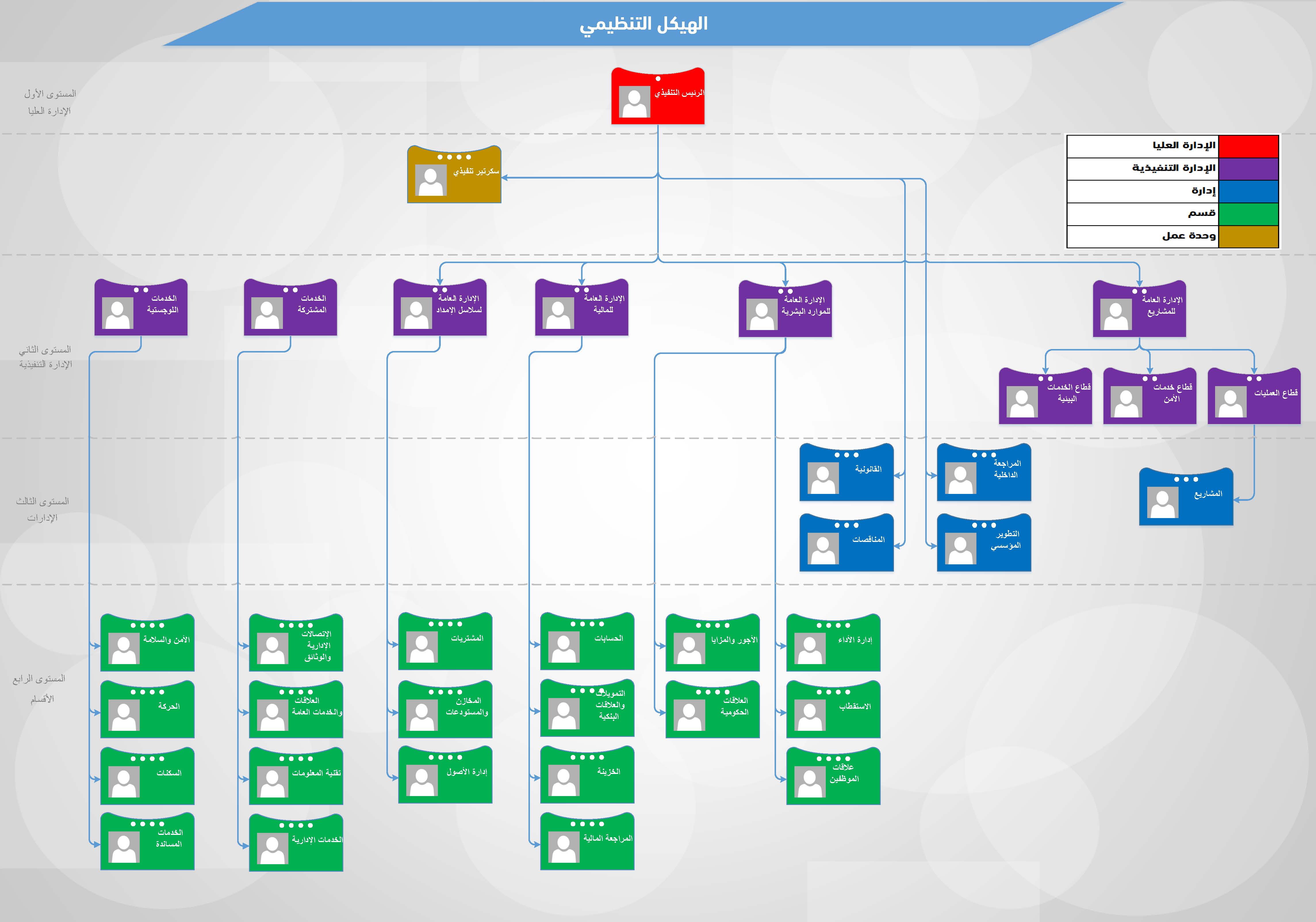
An organizational structure is one of the fundamental pillars of organizational development and management. It defines how an organization arranges its activities, distributes tasks and responsibilities, groups functions and departments, and establishes lines of authority, communication, and reporting relationships across different organizational levels.
Its role extends far beyond illustrating who reports to whom. An effective organizational structure is a strategic management tool that translates organizational direction into an organized operational framework, clarifies responsibilities and authorities, promotes coordination between departments, and enhances the effective utilization of resources.
A well-designed structure enables an organization to operate with clarity and efficiency. Conversely, an inappropriate structure may lead to overlapping responsibilities, conflicting authorities, slow decision-making, and ineffective coordination between departments.
1. Understanding Organizational Structure
An organizational structure is the formal arrangement of positions and administrative units within an organization. It defines management levels, reporting relationships, lines of authority and supervision, and coordination mechanisms between different organizational units.
Its fundamental components include:
- Departmentalization: How jobs, functions, and activities are grouped into departments and organizational units.
- Management Hierarchy: The levels of authority, supervision, and reporting relationships.
- Span of Control: The number of employees or organizational units directly supervised by a manager.
- Delegation of Authority: The decision-making powers assigned to each organizational level.
- Responsibilities and Accountability: The duties assigned to each position and the results it is expected to deliver.
- Coordination and Communication: The mechanisms through which different departments and units collaborate and exchange information.
It is important to distinguish between an organizational structure, job descriptions, and an authority matrix. The organizational structure defines reporting relationships and organizational units; job descriptions specify the duties and requirements of each position; and the authority matrix establishes decision-making and approval limits.
Together, these elements create a clear and integrated organizational framework.
2. Types of Organizational Structures
Organizational structures vary according to the nature of business activities, organizational size, geographical presence, diversity of products and services, and strategic direction.
The most common types include:
1. Functional Structure
The functional structure is one of the most widely used organizational models. It groups employees according to their professional specializations and the primary functions they perform.
Examples include:
- Human Resources Department.
- Finance Department.
- Marketing and Sales Department.
- Operations Department.
- Information Technology Department.
Advantages:
- Promotes specialization and professional expertise.
- Establishes clear reporting and accountability lines.
- Enables the sharing of resources and specialized knowledge.
- Facilitates the standardization of policies and procedures within each function.
Challenges:
- Departments may become isolated from one another, creating organizational silos.
- Cross-functional coordination may become slower.
- Departments may prioritize their own objectives over broader organizational goals.
This structure is suitable for organizations with clearly defined functional specializations that require consistent processes and centralized professional oversight.
2. Divisional Structure
A divisional structure organizes an organization into relatively independent business units or divisions based on products, services, markets, or customer segments.
Each division may have its own functional departments, such as finance, human resources, marketing, and operations, depending on its size and operational requirements.
Examples include:
- Services Division.
- Products Division.
- Technology Solutions Division.
- Projects Division.
Advantages:
- Creates greater accountability for individual business unit results.
- Improves responsiveness to customer and market requirements.
- Clarifies responsibility for operational and financial performance.
- Supports business expansion and diversification.
Challenges:
- May result in duplicated functions and resources across divisions.
- Can increase administrative and operational costs.
- Requires effective corporate governance to maintain consistency across the organization.
3. Matrix Structure
The matrix structure combines functional departments with project-based or product-based teams.
Employees remain associated with their functional departments while also participating in specific projects or programs.
Depending on the organizational model, an employee may have a functional reporting relationship with a department manager and a project-related reporting or coordination relationship with a project manager.
Advantages:
- Enables the sharing of specialized expertise across departments.
- Encourages cross-functional collaboration.
- Improves the utilization of human resources.
- Provides flexibility in managing multiple projects and programs.
Challenges:
- Potential conflicts between functional and project priorities.
- More complex reporting and accountability relationships.
- Requires clear mechanisms for resolving conflicts and allocating resources.
This structure is particularly suitable for organizations managing multiple projects that require continuous collaboration between different functions and professional disciplines.
4. Geographic Structure
A geographic structure organizes an organization according to the regions or locations in which it operates. Each geographical unit is responsible for managing activities and delivering services within its assigned territory.
Examples include:
- Central Region.
- Western Region.
- Eastern Region.
- Northern and Southern Regions.
Advantages:
- Improves responsiveness to local requirements.
- Accommodates regional operational and market differences.
- Enhances supervision of geographically dispersed branches and facilities.
- Supports geographical expansion.
Challenges:
- May create duplication of functions across regions.
- Requires effective coordination between headquarters and regional units.
- May lead to differences in performance and policy implementation across locations.
5. Product-Based Structure
A product-based structure organizes the organization around its products or service lines. Each product or product group has an assigned organizational unit responsible for its development, management, and business performance.
This model is commonly used by organizations offering diverse products or services with different markets, customer requirements, and operational needs.
Advantages:
- Encourages focused product and service development.
- Establishes clear accountability for product performance.
- Improves responsiveness to changing market requirements.
- Supports innovation and product development.
Challenges:
- May duplicate certain shared functions.
- Product lines may compete for organizational resources.
- Requires coordination of corporate strategies and policies across product units.
6. Process-Based Structure
A process-based structure organizes activities around the major business processes that deliver value to customers or stakeholders, rather than relying exclusively on traditional functional departments.
Examples include organizing activities around integrated processes such as:
- Employee Recruitment and Onboarding.
- Procurement and Supply Chain.
- Customer Service Delivery.
- Request and Approval Management.
- Complaint Management and Continuous Improvement.
Advantages:
- Focuses on end-to-end workflow delivery.
- Reduces duplication and overlapping activities.
- Improves customer and stakeholder experience.
- Supports process performance measurement and improvement.
Challenges:
- May require redesigning existing roles and reporting relationships.
- Requires collaboration across different professional functions.
- Potential conflicts may arise between process owners and traditional functional managers if responsibilities are not clearly defined.
7. Network Structure
A network structure relies on collaboration between an organization and external parties, such as suppliers, business partners, service providers, and independent specialists, to deliver certain activities or integrated services.
The organization may retain its core strategic functions internally while outsourcing other activities through formal agreements and defined service-level requirements.
Advantages:
- Provides flexibility in accessing external expertise.
- Reduces the need to maintain all resources internally.
- Enables faster expansion.
- Allows the organization to focus on its core activities.
Challenges:
- Creates dependency on external service providers.
- Requires effective contract and service-level management.
- Introduces information security and business continuity risks.
- Requires clear governance and oversight of external relationships.
3. The Importance of Organizational Structure
The importance of an organizational structure extends beyond arranging departments within an administrative chart. It directly influences various aspects of organizational performance.
Its main benefits include:
1. Improving Operational Efficiency
It supports clear task allocation, reduces duplicated activities and overlapping responsibilities, and improves the utilization of human and physical resources.
2. Clarifying Responsibilities and Authorities
It defines roles, responsibilities, and reporting lines, strengthens accountability, and reduces conflicts between organizational units.
3. Enhancing Communication and Coordination
It facilitates information flow across management levels and departments while promoting collaboration in shared activities.
4. Accelerating Decision-Making
An appropriate structure clarifies decision-making and approval levels, reduces unnecessary procedures, and delegates authority to the appropriate organizational levels.
5. Supporting Growth and Expansion
It provides a framework that can evolve as the organization increases its workforce, branches, products, services, or geographical presence.
6. Strengthening Governance and Control
It helps establish oversight responsibilities, appropriate segregation of duties, clear approval relationships, and mechanisms for reducing conflicts of interest.
7. Aligning Strategy with Execution
It connects organizational units to strategic objectives and translates strategic direction into clearly defined operational responsibilities and activities.
4. How to Select the Right Organizational Structure
There is no single organizational structure suitable for every organization. The appropriate structure is the one that aligns with the organization's business nature, strategy, size, and operational complexity.
Before approving an organizational structure, management should consider several factors:
- Organizational Strategy: Is the organization focused on specialization, product diversification, geographical expansion, or project management?
- Organizational Size: The number of employees, departments, branches, and management levels.
- Nature of Business Activities: The complexity of operations and the professional specializations required.
- Operating Environment: The pace of change, customer expectations, and regulatory requirements.
- Centralization and Decentralization: Determining which decisions should remain centralized and which can be delegated.
- Available Resources: The availability of the competencies and resources required to operate the proposed structure.
- Future Growth Plans: The structure's ability to accommodate expansion without requiring a complete redesign at every stage.
In many cases, a Hybrid Structure may be the most appropriate solution. It combines different organizational models, such as centralized functional departments alongside independent business divisions, project teams, or geographical units.
5. Steps for Developing and Improving an Organizational Structure
Developing an organizational structure is an organizational development exercise that requires careful analysis and planning. It should not begin simply by drawing boxes and reporting lines to represent departments and managers.
The process can be implemented through the following stages:
1. Analyzing the Current Organizational Situation
Reviewing the existing structure, departments, positions, reporting relationships, overlapping responsibilities, and administrative bottlenecks.
2. Reviewing Organizational Strategy and Objectives
Understanding the organization's strategic direction and identifying the structural requirements necessary to achieve its objectives.
3. Analyzing Jobs and Business Processes
Identifying primary and supporting activities, duties, responsibilities, interdepartmental relationships, and future organizational requirements.
4. Defining Organizational Units and Management Levels
Designing departments, sections, and units while determining management levels, supervisory arrangements, and areas of responsibility.
5. Defining Authorities and Reporting Relationships
Clarifying lines of authority, reporting and supervision, decision-making limits, and delegation arrangements.
6. Preparing and Approving the Organizational Structure
Developing the organizational chart and supporting documentation, reviewing them with relevant stakeholders, and obtaining formal approval from authorized management.
7. Aligning Positions and Job Descriptions
Updating job titles and descriptions to reflect the new structure and defining the requirements and responsibilities of each position.
8. Managing Organizational Change and Implementation
Communicating changes to employees, explaining new responsibilities, addressing overlaps, and implementing the structure through an appropriate transition plan.
9. Continuous Review and Development
Periodically assessing the effectiveness of the structure to ensure that it remains aligned with changes in strategy, organizational size, and business requirements.
6. An Organizational Structure Is More Than an Organizational Chart
One common misconception is that developing an organizational structure is complete once an organizational chart has been designed to illustrate departments, job titles, and reporting relationships.
An effective structure requires an integrated set of documents and management practices to ensure proper implementation.
These include:
- Organization and Administrative Structure Manual.
- Departmental Mandates and Key Responsibilities.
- Job Descriptions.
- Delegation of Authority Matrix.
- Responsibility Assignment Matrix (RACI), where appropriate.
- Organizational Policies and Procedures.
- Performance Indicators for Organizational Units.
- Interdepartmental Coordination and Communication Mechanisms.
The structure should also reflect fundamental organizational principles, including unity of direction, clarity of authority and responsibility, balanced spans of control, appropriate segregation of duties, and the avoidance of unnecessary administrative complexity.
An organization may have a visually impressive organizational chart yet continue to experience poor performance if responsibilities, authorities, and business processes are not clearly defined and effectively implemented.
Conclusion
An organizational structure is not merely a method of dividing an organization into departments and sections. It is one of the most important organizational design tools for determining how work, resources, and authority are distributed and how coordination, accountability, and strategic execution are achieved.
Selecting the appropriate structure should not be based on copying other organizations or adopting a popular organizational model. It should be based on a thorough understanding of the organization's nature, objectives, processes, and current and future requirements.
A successful organizational structure places responsibility where it belongs, grants authority to those accountable for delivering results, promotes integration between organizational units, and enables the organization to perform, adapt, and grow.
An organization's strength is not measured by the number of its departments or management levels, but by the effectiveness of its design and its ability to transform resources and responsibilities into tangible results.